
BYJU's :
BYJU's :
Intent Driven Immersive Learning for Kids 12-18 yrs
Intent Driven Immersive Learning for Kids 12-18 yrs
Intent Driven Immersive Learning for Kids 12-18 yrs
Voice User Experience
Voice User Experience
UX research
UX research
Strategy
Strategy
Prototyping
Prototyping
User testing
User testing
Project planning
Project planning
Conversation Design
Conversation Design
THE PROBLEM
THE PROBLEM
Lack of personalised learning
Lack of personalised learning
Lack of personalised learning
In today's digital age, traditional educational apps often fall short in engaging students and promoting self-directed learning.
In today's digital age, traditional educational apps often fall short in engaging students and promoting self-directed learning.
→ Limited Engagement: Students frequently find online educational content monotonous and unengaging.
→ Lack of Personalization: Content fails to adapt to individual learning styles and needs.
→ Ineffective Learning: Difficulty in understanding and retaining concepts through basic repository-style content.
→ Low Student Success and Renewal: Poor learning outcomes and low renewal rates due to lack of immersive, intent-driven learning experiences
→ Limited Engagement: Students frequently find online educational content monotonous and unengaging.
→ Lack of Personalization: Content fails to adapt to individual learning styles and needs.
→ Ineffective Learning: Difficulty in understanding and retaining concepts through basic repository-style content.
→ Low Student Success and Renewal: Poor learning outcomes and low renewal rates due to lack of immersive, intent-driven learning experiences
ANALYSING DATA
Research and discovery
Research and discovery
ANALYSING DATA
Research and discovery
30
30
Kids interviewed
Kids interviewed
32
32
32
Mentors interviewed
Mentors interviewed
Mentors interviewed
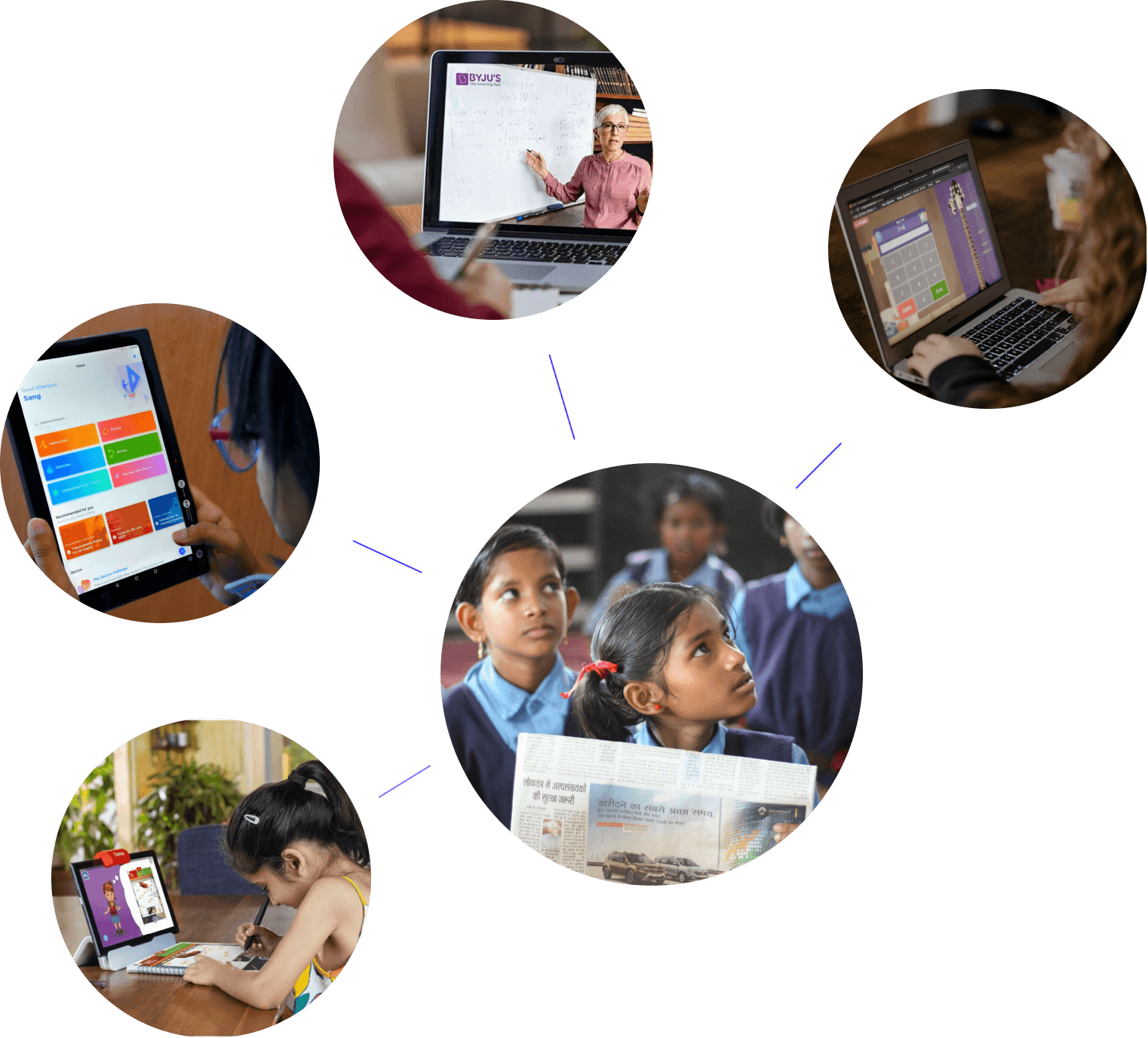
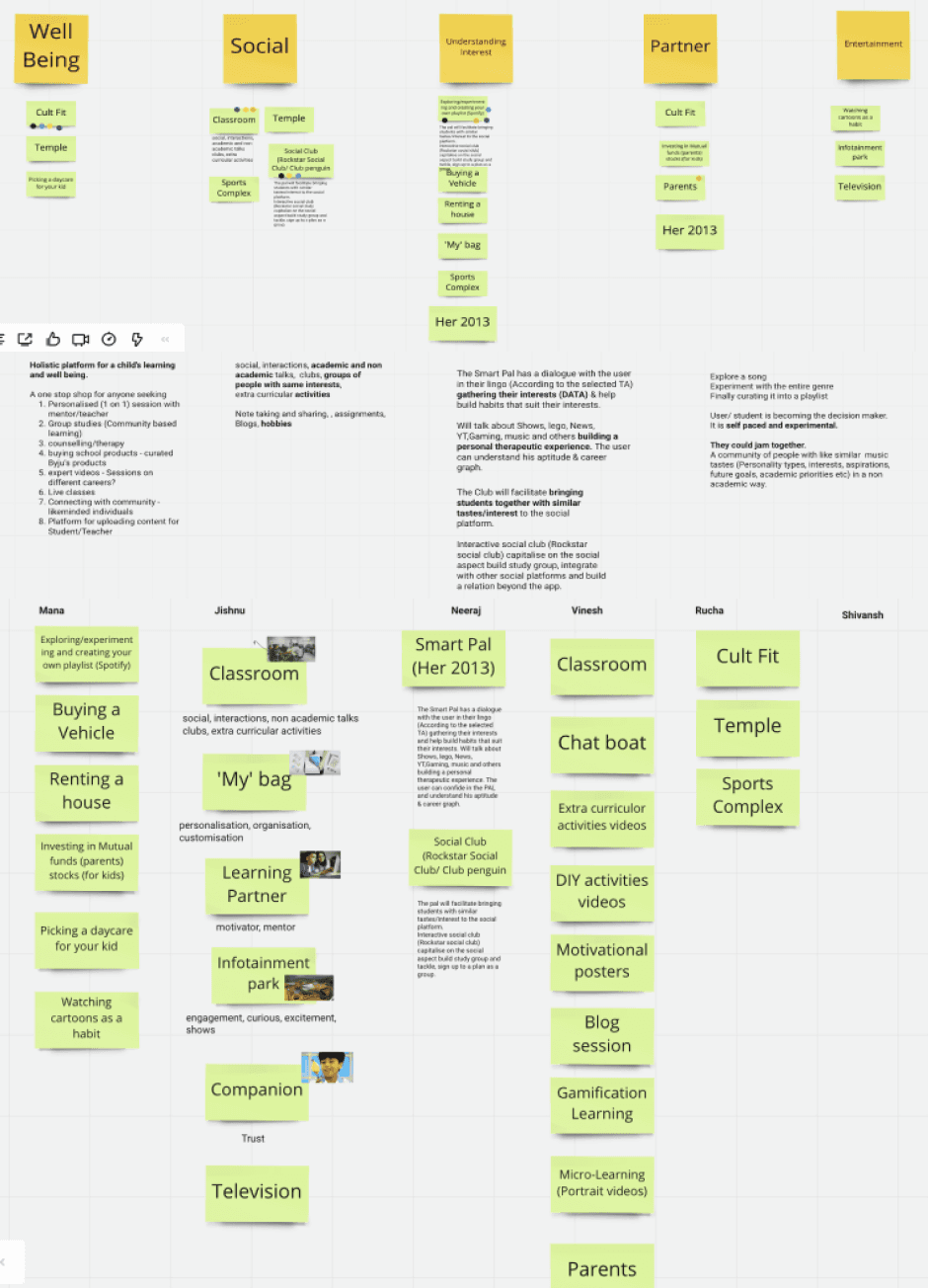
User interviews, data analysation, and user feedback, gave an understanding of the needs and pain points of our users. This research confirmed our initial hypothesis regarding the challenges faced by students using the app.
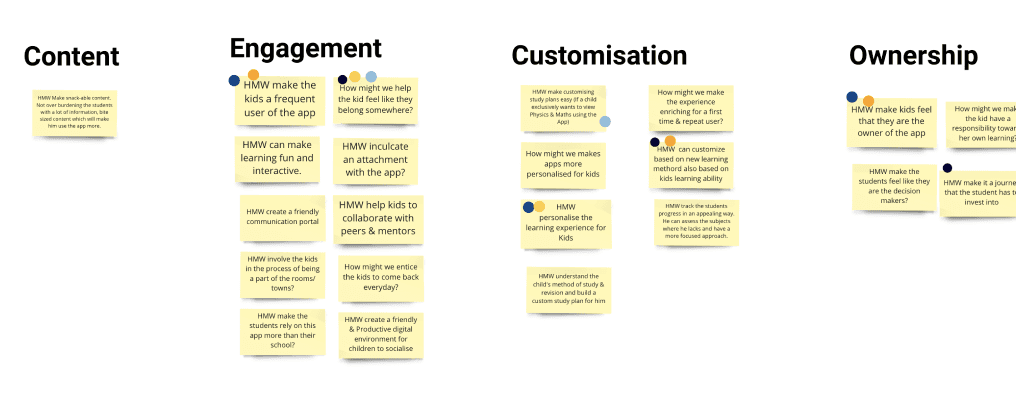
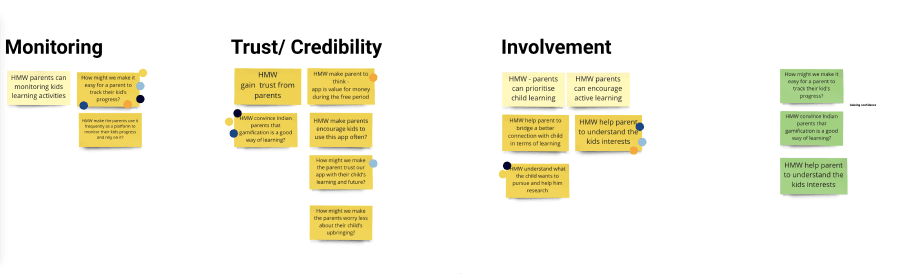
Thematic analysis
Thematic analysis
Thematic analysis
→ Low Engagement: Students find current content uninteresting and struggle to stay motivated.
→ Lack of Personalisation: The one-size-fits-all approach does not cater to diverse learning styles and needs.
→ Difficulty Retaining Concepts: Students often have trouble understanding and retaining material through standard video lessons.
→ Frustration with Navigation: Users find the app's navigation confusing and unintuitive, hindering their learning experience.
→ Limited Feedback Mechanisms: There is a lack of immediate, actionable feedback for students to gauge their progress and areas for improvement.
These insights are crucial for informing the redesign of the app to better meet the needs of students, fostering an engaging and effective learning environment.
→ Low Engagement: Students find current content uninteresting and struggle to stay motivated.
→ Lack of Personalisation: The one-size-fits-all approach does not cater to diverse learning styles and needs.
→ Difficulty Retaining Concepts: Students often have trouble understanding and retaining material through standard video lessons.
→ Frustration with Navigation: Users find the app's navigation confusing and unintuitive, hindering their learning experience.
→ Limited Feedback Mechanisms: There is a lack of immediate, actionable feedback for students to gauge their progress and areas for improvement.
These insights are crucial for informing the redesign of the app to better meet the needs of students, fostering an engaging and effective learning environment.
CONCEPTUALISATION
CONCEPTUALISATION
Intent driven learning
Intent driven learning
The solution involved redesigning the app into three distinct sections, each based on specific learning intents to cater to diverse educational needs. We defined these sections as follows:
The solution involved redesigning the app into three distinct sections, each based on specific learning intents to cater to diverse educational needs. We defined these sections as follows:
The solution involved redesigning the app into three distinct sections, each based on specific learning intents to cater to diverse educational needs. We defined these sections as follows:
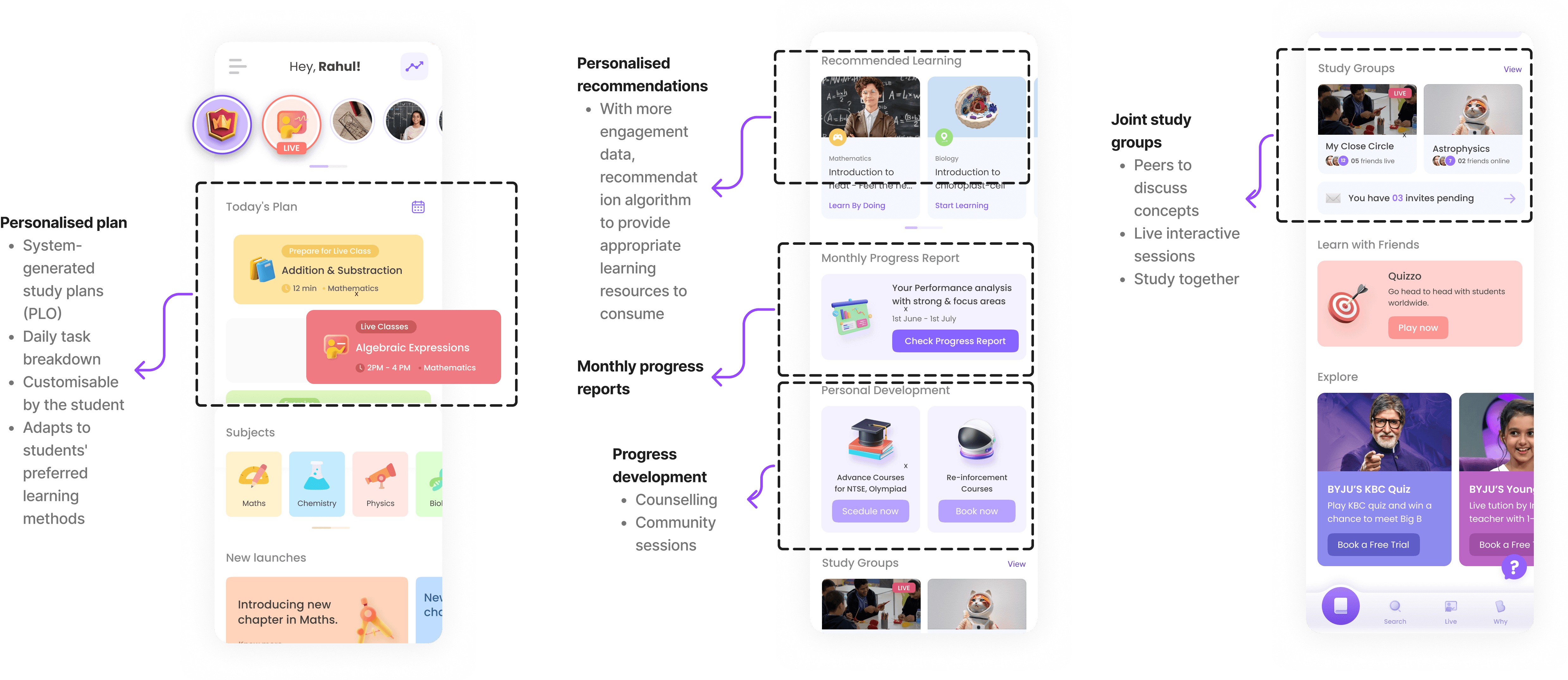
Personalised learning:
Study plans and calendars
Daily task breakdown
Adapts to students' preferred learning methods
Personalised learning:
Study plans and calendars
Daily task breakdown
Adapts to students' preferred learning methods
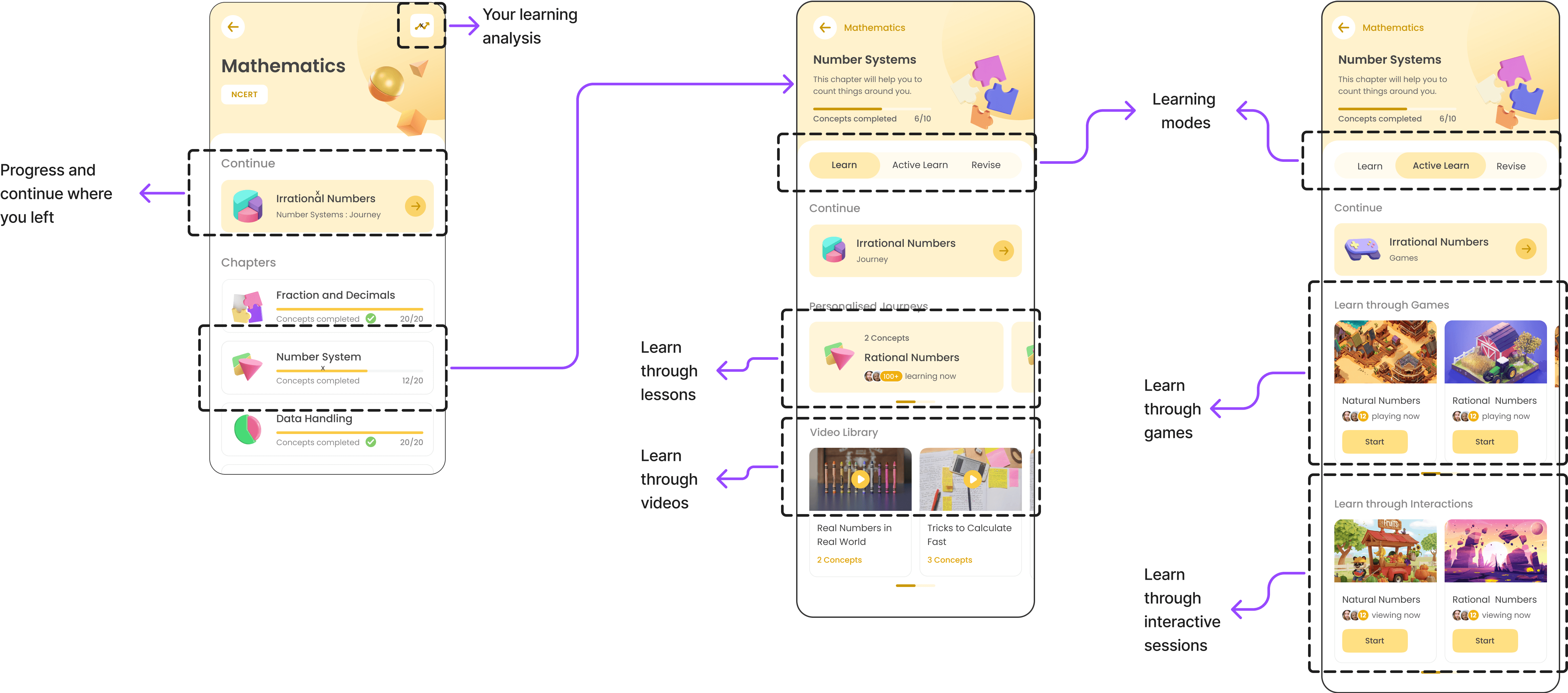
Self learning modules:
Structured, curriculum-based learning for systematic education.
Self learning modules:
Structured, curriculum-based learning for systematic education.
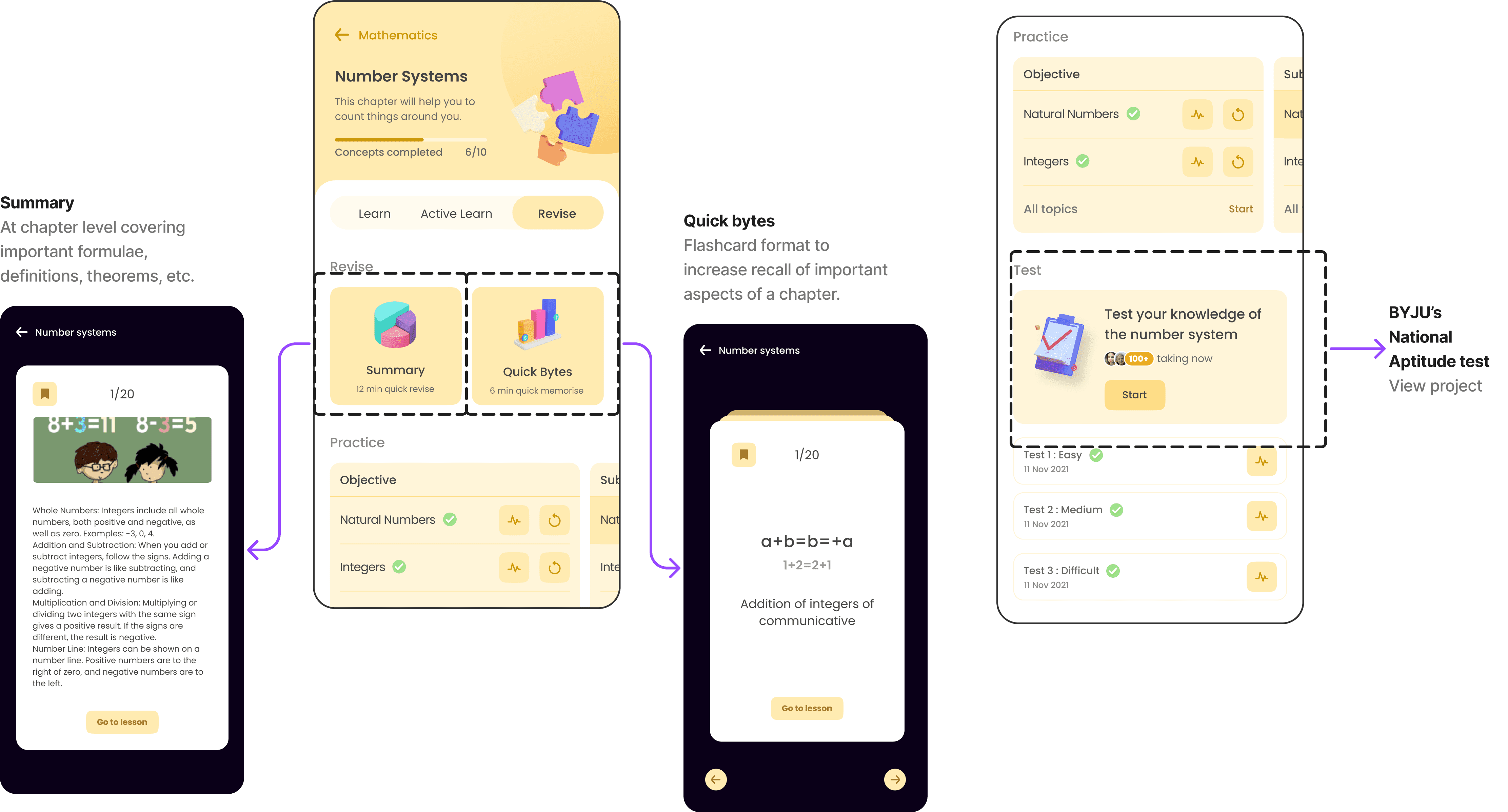
Practice and revise
In-app quizzes, revision modules, and gamified practice sessions
Practice and revise
In-app quizzes, revision modules, and gamified practice sessions
Personalised learning
Personalised learning
Personalised learning
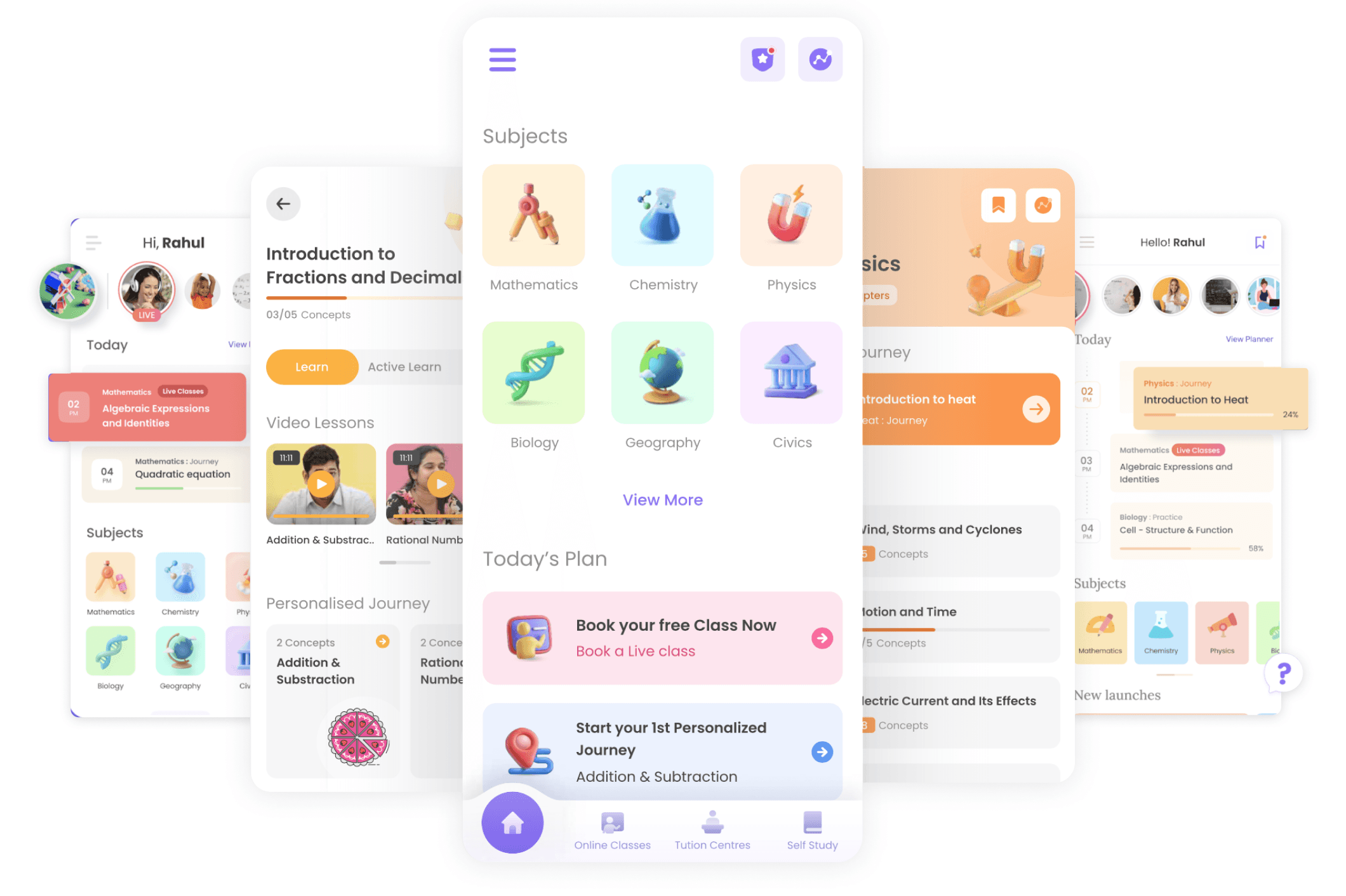
The home page dynamically adapts to each student's learning journey, presenting study plans, calendars, progress reports, and personalised recommendations. It also includes sections for personal development, rearranging content based on the student's current progress and needs, ensuring a tailored and engaging learning experience.
The home page dynamically adapts to each student's learning journey, presenting study plans, calendars, progress reports, and personalised recommendations. It also includes sections for personal development, rearranging content based on the student's current progress and needs, ensuring a tailored and engaging learning experience.
Self-learning modules
Self-learning modules
Self-learning modules
Interactive learning modules offer engaging, curriculum-based content through interactive videos, quizzes, and gamified practice sessions. These modules are designed to adapt to the student's learning pace, providing immediate feedback and personalized challenges to enhance understanding and retention.
Interactive learning modules offer engaging, curriculum-based content through interactive videos, quizzes, and gamified practice sessions. These modules are designed to adapt to the student's learning pace, providing immediate feedback and personalized challenges to enhance understanding and retention.
Revision module
Revision module
Research revealed that revision is a crucial learning behaviour before exams. Students prepare for exams by quickly recalling concepts, regularly revising during holidays or weekends to reduce last-minute cramming, and reinforcing classroom learnings daily post-class.
Research revealed that revision is a crucial learning behaviour before exams. Students prepare for exams by quickly recalling concepts, regularly revising during holidays or weekends to reduce last-minute cramming, and reinforcing classroom learnings daily post-class.
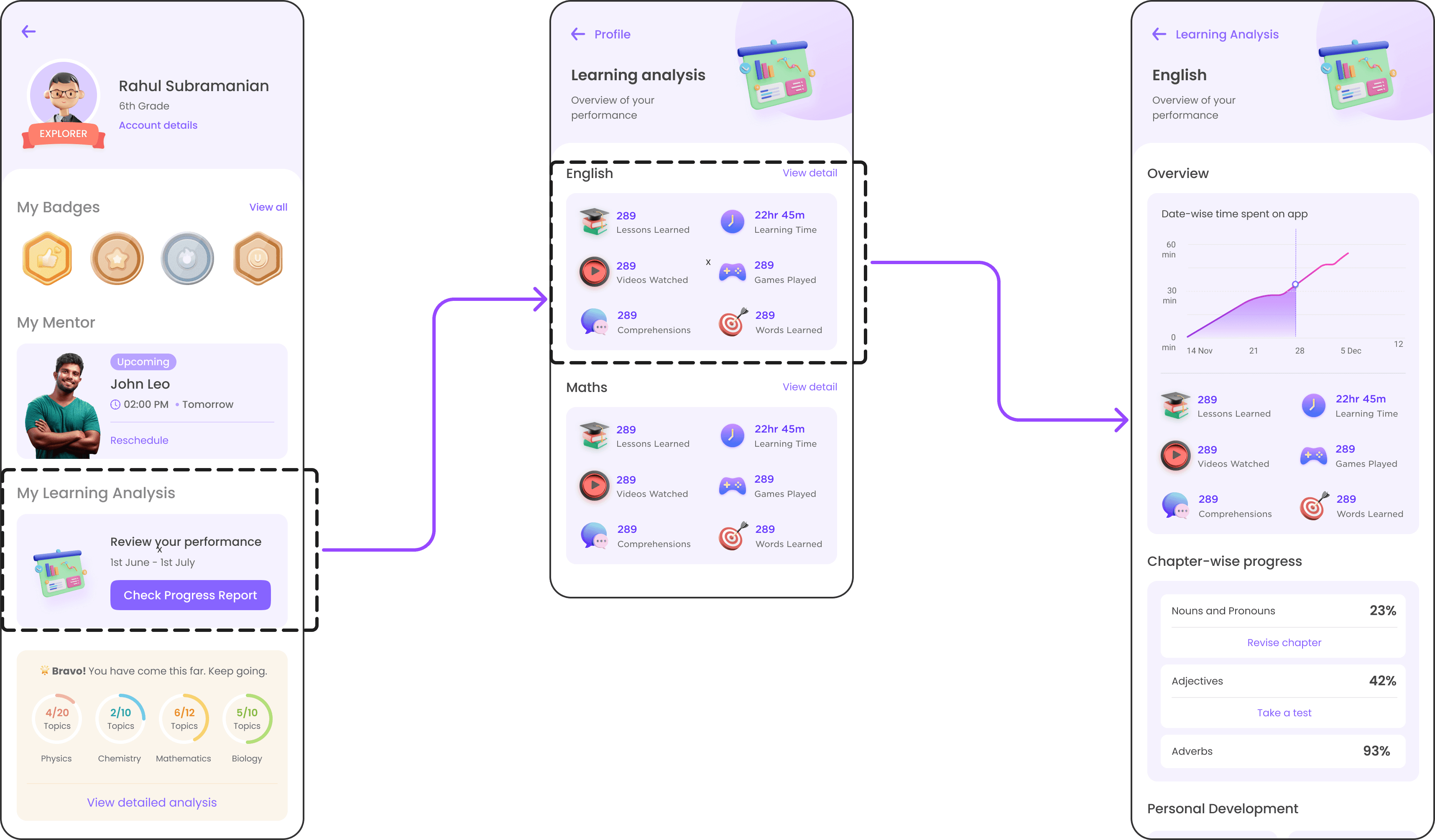
Learning analysis
Learning analysis
Surveys with 400 kids and interviews with 14 kids revealed that revision is a crucial learning behaviour before exams. Students prepare for exams by quickly recalling concepts, regularly revising during holidays or weekends to reduce last-minute cramming, and reinforcing classroom learnings daily post-class.
SELECTED SCREENS
SELECTED SCREENS
Visual Elements and Information Grouping
Visual Elements and Information Grouping
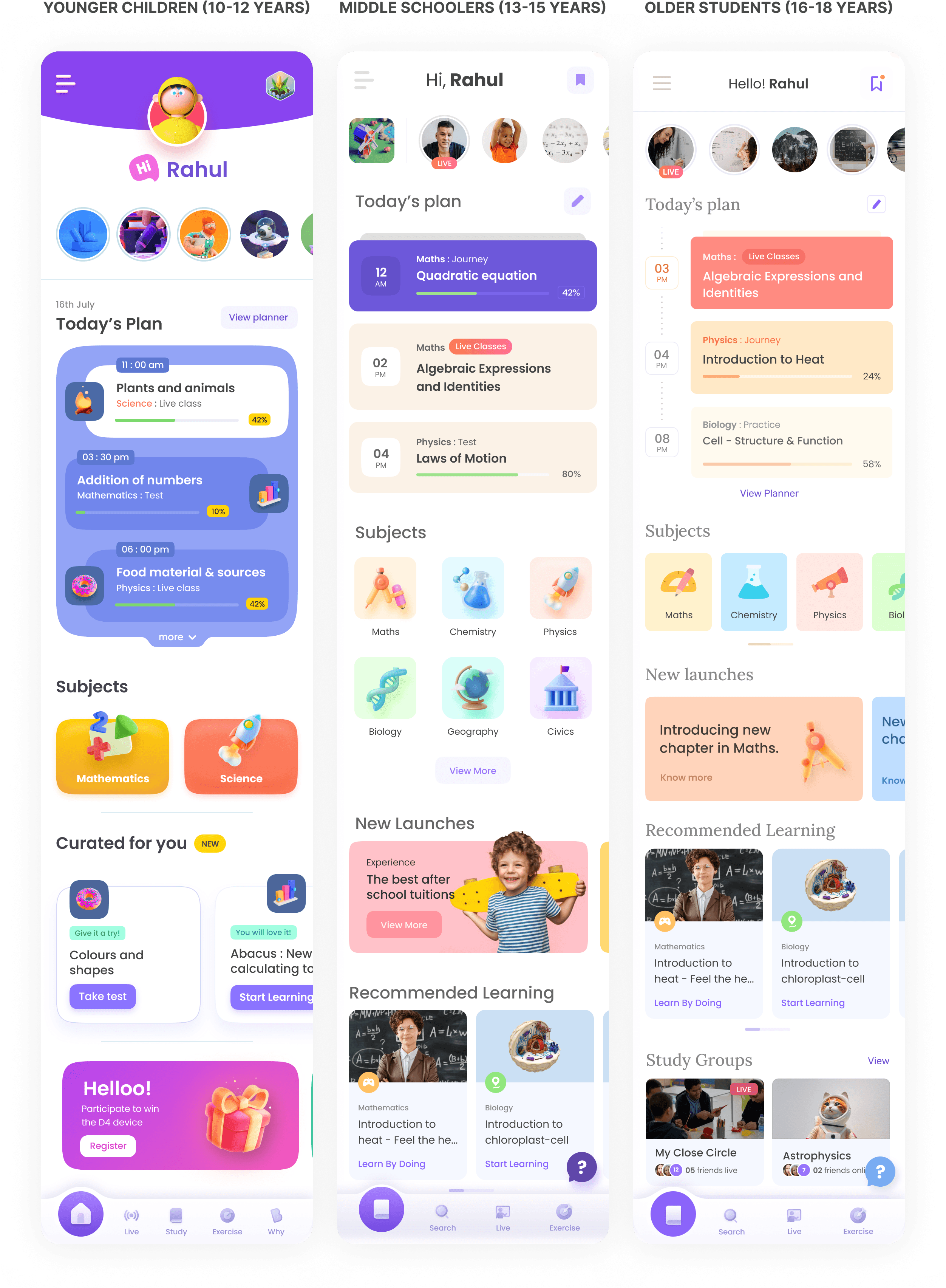
The UI was tailored for three age groups: younger children (10-12), middle schoolers (13-15), and older students (16-18). The design aimed to engage students, provide necessary tools, and support age-appropriate learning.
The UI was tailored for three age groups: younger children (10-12), middle schoolers (13-15), and older students (16-18). The design aimed to engage students, provide necessary tools, and support age-appropriate learning.

10 - 12 years
10 - 12 years
Younger children
Visuals : Bright colours, playful icons, larger fonts.
Grouping: Simple layout, minimal text, emphasis on visual cues.
Challenges: Balancing fun with intuitive navigation.
Visuals : Bright colours, playful icons, larger fonts.
Grouping: Simple layout, minimal text, emphasis on visual cues.
Challenges: Balancing fun with intuitive navigation.
Visuals : Bright colours, playful icons, larger fonts.
Grouping: Simple layout, minimal text, emphasis on visual cues.
Challenges: Balancing fun with intuitive navigation.

13-15 years
Middle schoolers
Visuals: Balanced colours, medium fonts.
Grouping: Mix of visuals and text, clear categorisation.
Challenges: Appealing yet mature design.
Visuals: Balanced colours, medium fonts.
Grouping: Mix of visuals and text, clear categorisation.
Challenges: Appealing yet mature design.

16-18 years
Older students
Visuals: Subdued colours, detailed icons, smaller fonts.
Grouping: Detailed layout, study plans, and progress reports.
Challenges: Comprehensive yet uncluttered interface.
Visuals: Subdued colours, detailed icons, smaller fonts.
Grouping: Detailed layout, study plans, and progress reports.
Challenges: Comprehensive yet uncluttered interface.
Learning Engagement Scores ↑33.6% in <4 months
Learning Engagement Scores ↑33.6% in <4 months
Impact of modes of learning
% completion
% completion
of at least one course module per month
Impact of Joint study group
% retention
% retention
compared to 50% overall retention
Return users for revision tool
% (16-18 yrs)
% (16-18 yrs)
return to the revision tool within a week